

Gymshark
gymshark.com
Overall Score
74/100
Good — Room to Grow
SEO
78/100
GEO
68/100
What's Working Well
- ✓Rich Product schema with GTINs, MPNs, SKUs, and aggregate reviews on every product page — some of the best structured data in the apparel space
- ✓Exceptional content depth on the blog — expert-authored guides like the Leggings Size Guide with FAQ schema, original designer quotes, and first-hand product insight
- ✓Comprehensive hreflang covering 14 international storefronts — AU, CA, DE, FR, GB, US, EU and more — properly implemented in <head>
Critical Issues Found
- !Dynamic Yield personalization engine throwing
TypeError: DY.API is not a function— recommendations and A/B tests may be silently broken across the site - !No upsell, cross-sell, or product recommendations visible in the cart — a direct CRO revenue gap for a store at this volume
- !Product meta descriptions are template-generated ("Shop the X in Y. With next day delivery and free returns") — zero differentiation across hundreds of SKUs
Growth Opportunity
Gymshark's technical foundation and brand authority are genuinely strong — this is one of the best-performing DTC brands in the fitness space, and it shows in their structured data, international architecture, and content quality. The opportunities here are not about fundamentals, they are about execution gaps: a broken personalization layer, generic product descriptions that commoditize a premium brand, and a cart experience that leaves obvious revenue on the table. Fixing these three areas alone could meaningfully lift conversion rate at the scale Gymshark operates.
-
All Pages — JavaScript Layer
Dynamic Yield personalization engine broken —
TypeError: DY.API is not a functionfires on every page load via GTMDY.API is called before the Dynamic Yield SDK initializes. Ensure the DY script fires synchronously or use a ready-callback. Every broken call means product recommendations, A/B tests, and personalized banners are silently failing. At Gymshark's traffic volume this is significant lost revenue.
Critical Technical -
Cart Page — /cart
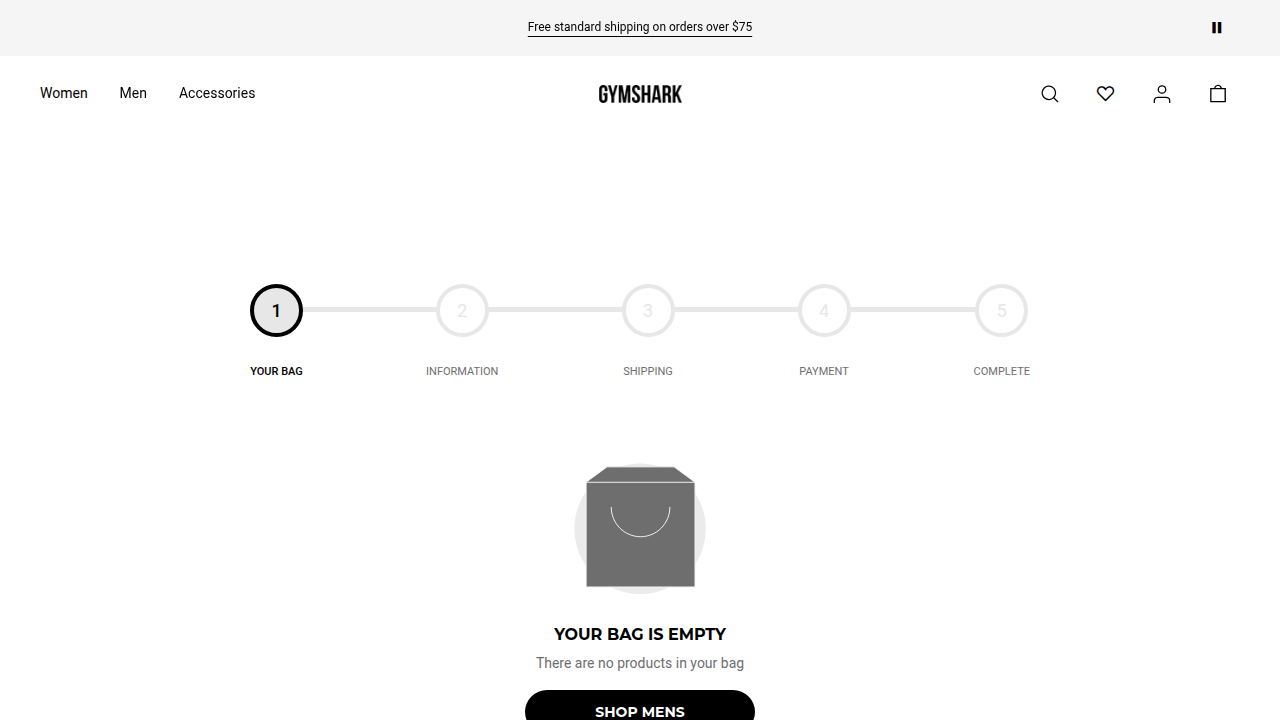
Zero cart upsells or cross-sell recommendations visible — the cart page displays only an empty state with two CTAs to shop men's or women's
Implement product recommendations in the cart (frequently bought together, complete the look, accessories). For a brand at this scale, even a 5% cart attach rate on a $15 accessory would represent millions in incremental revenue annually. This is the most direct CRO gap in the audit.
Critical CRO -
Product Pages — All SKUs
Meta descriptions follow a generic template: "Shop the [Product] in [Color]. With next day delivery and free returns, shop online today at Gymshark." — identical structure across hundreds of products
Write unique meta descriptions that lead with the product's actual differentiator (fabric technology, specific use-case, standout feature). Template descriptions miss the opportunity to drive CTR from search results. Even AI-generated descriptions with product attributes would outperform the current template.
Critical SEO -
All Pages — Analytics
Reddit Pixel script at redditstatic.com/ads/pixel.js returning HTTP 403 on every page load — the pixel is failing silently
Check whether the Reddit pixel is still in active use. If campaigns are running on Reddit, investigate why the pixel script is blocked (likely a domain/referer policy issue or the script URL has changed). Remove it from GTM if Reddit advertising has been paused, to avoid unnecessary failed network requests.
Warning Technical -
All Pages — Analytics
mParticle SDK logging attribute type errors: the corresponding attribute value of 'page_category' must be a string, number, boolean, or null — firing repeatedly on product pages
The page_category and filters event attributes are passing non-primitive values (likely arrays or objects). Fix the GTM data layer push to serialize these values as strings before passing to mParticle. This is causing data quality issues in the Customer Data Platform and downstream audience segments.
Warning Technical -
All Pages — Analytics
Meta Pixel receiving invalid currency parameter format — logged in browser console on product pages
Validate the currency parameter passed to fbq('track', 'ViewContent') — it should be a 3-letter ISO code string (e.g. "USD"). Check the GTM tag configuration for the Facebook pixel events and ensure currency is not being passed as an object or undefined value.
Warning Technical -
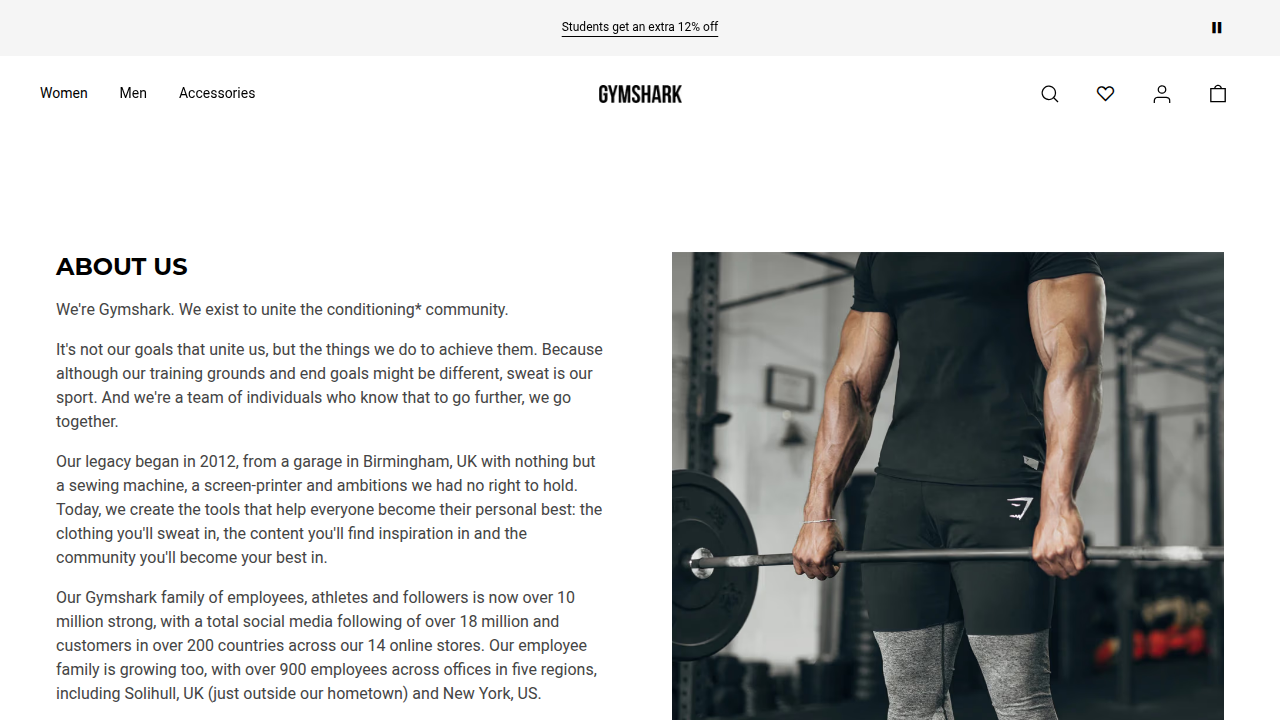
About Us Page — /pages/about-us
No JSON-LD structured data on the About page — the page has strong brand entity content (founder names, founding story, leadership team) but no Organization schema
Add Organization schema to this page with: name, url, logo, foundingDate (2012), founders array (Ben Francis), numberOfEmployees, and description. This directly supports Knowledge Graph recognition and AI entity disambiguation — a missed GEO opportunity given the rich content already present.
Warning GEO -
Header Navigation — All Pages
Navigation images use all-caps generic alt text: "NEW IN", "SUMMER STAPLES", "SHORTS" — not descriptive of the actual linked content or visual
Replace all-caps promo label alt text with descriptive alternatives that explain what the image shows (e.g. "Gymshark women's new arrivals summer 2026 — seamless leggings and sports bras"). This improves accessibility and multimodal indexing for AI search surfaces.
Warning GEO -
Homepage — Hero Section
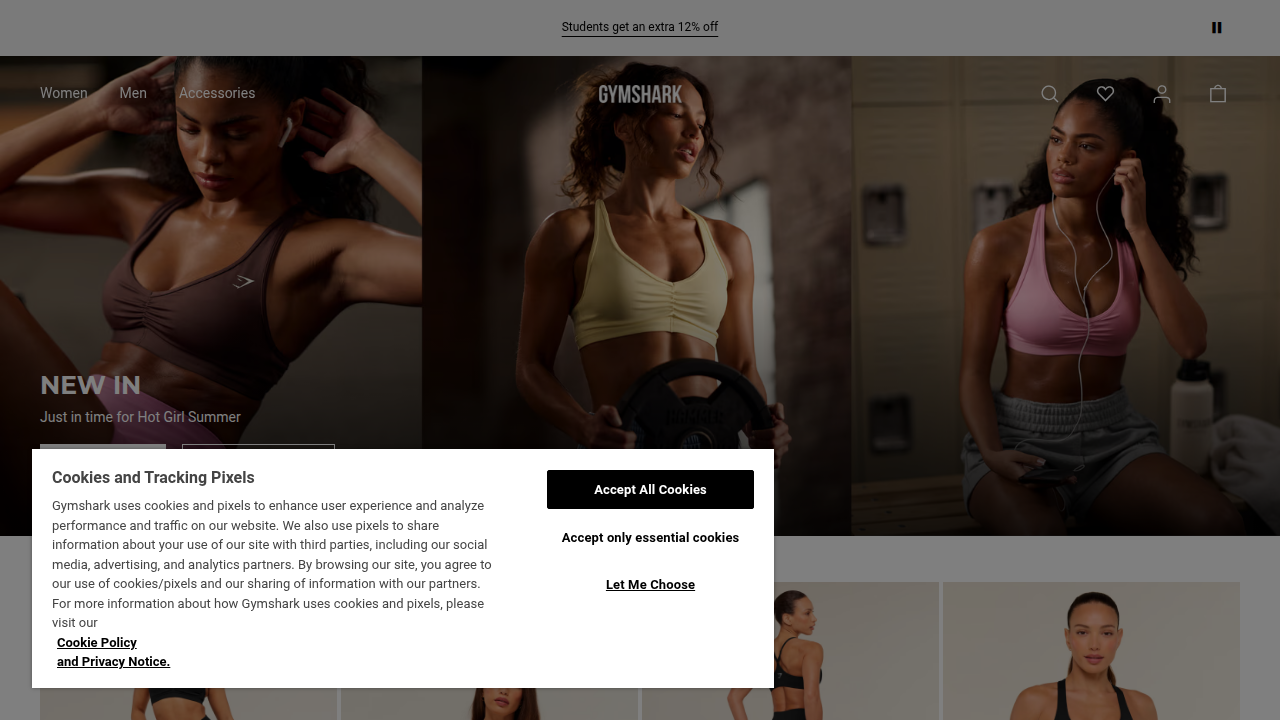
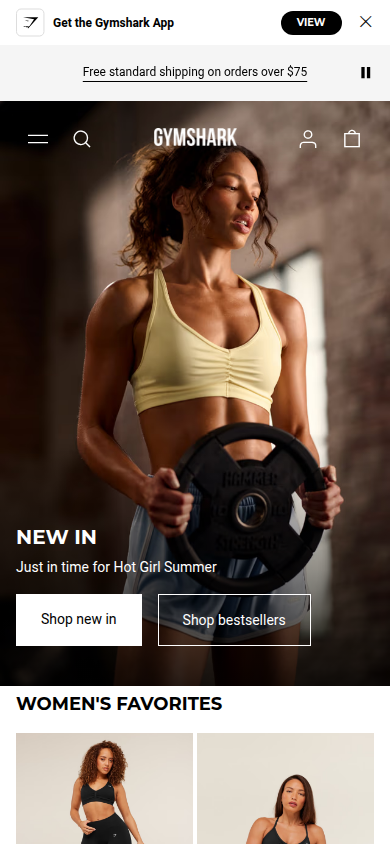
Homepage H1 is "Workout Clothes & Gym Clothes" — functional but misses the opportunity to include the brand name or a more compelling positioning statement that aligns with customer search intent
Consider incorporating the brand name or a specific value proposition: "Gymshark — Gym Clothes Built for Performance" or similar. The current H1 is generic and shared across many competitor pages.
Warning SEO -
Codebase — Next.js App
Next.js runtime config deprecation warning fires on every page: "Runtime config is deprecated and will be removed in Next.js 16. Please remove the usage of next/config"
Migrate from next/config (getConfig()) to environment variables or the new Next.js configuration patterns. This is a non-breaking warning now but will become an error on the Next.js 16 upgrade, which will need to happen eventually. Schedule this as part of a regular dependency maintenance sprint.
Info Technical -
Product Pages — Organization Schema
Organization schema on the homepage is missing foundingDate, founders, and numberOfEmployees fields — limiting Knowledge Graph completeness
Enrich the existing Organization schema (currently has name, url, logo, sameAs) with: foundingDate: "2012", founders: [{@type: "Person", name: "Ben Francis"}], numberOfEmployees: {value: 900}. These fields directly support entity recognition in Google's Knowledge Graph and AI search systems.
Info GEO -
Blog Articles — Structured Data
Article schema publisher object contains only sameAs social links, missing the name field:
"publisher": {"@type": "Organization", "sameAs": [...]}Add "name": "Gymshark" to the publisher object in Article schema. Without a publisher name, Google's structured data parser cannot fully resolve the publishing entity. Also add a logo object to the publisher for rich results eligibility.
Info SEO
Gymshark has a genuinely strong foundation for AI search visibility: excellent blog content with original expert quotes, a well-known brand entity with Wikipedia presence, and comprehensive structured data on product pages. The gaps are in product description quality, the About page schema, and a few technical issues that could limit how AI systems understand and cite the brand.
GEO Dimensions
62
Non-Commodity Content Quality
Blog content (Gymshark Central) is excellent — original designer quotes, first-hand sizing expertise, real product testing insights. Product descriptions, however, are largely marketing copy that restates specs without unique perspective. The highest-weighted GEO factor deserves investment in product storytelling.
80
Entity Clarity & Brand Authority
Strong: Wikipedia page, 18M+ social following, About Us page with founder Ben Francis and leadership team names. About page JSON-LD is missing — adding Organization schema here would complete the entity signal. Press mentions and certifications are not surfaced on the page.
85
Technical Crawlability
No AI crawler blocks in robots.txt — GPTBot, ClaudeBot, Google-Extended all have full access. Sitemap is well structured with product, collection, blog, and hreflang sub-sitemaps. llms.txt does not exist (not required per Google). No nosnippet directives found on key pages.
72
Content Structure & Semantic HTML
Blog articles use proper H1 hierarchy and FAQ schema with real Q&A content. Product pages have a single H1 but H2 usage jumps to footer navigation headings (Help, My Account, Pages) rather than content sections. Collection pages have minimal H2 content structure.
88
Structured Data
Outstanding ProductGroup schema with GTINs, MPNs, size-level variants, AggregateRating, and individual reviews. WebSite and Organization schemas on the homepage. FAQPage schema on blog articles. Missing: Organization on About page, publisher name in Article schema, BreadcrumbList on product/collection pages.
65
Multimodal Readiness
Product images are high quality with multiple angles. However, many navigation banner images have all-caps generic alt text ("NEW IN", "SUMMER STAPLES") that provides no visual description for AI image understanding. Product image filenames are also non-descriptive CDN hashes.
75
Query Fan-Out Readiness
The Gymshark Leggings Size Guide is a model for this — it naturally covers sub-queries about sizing, fit, fabric, waistbands, and use-cases in a single comprehensive page. Product collection pages, however, are thin on descriptive text and rely heavily on product cards rather than editorial content.
70
Google Merchant Center
Google Ads purchase conversion tracking (gtag) is active on product and checkout pages, suggesting Merchant Center integration. Product feed coverage is inferred from Shopping ad activity. No explicit Merchant Center badge or feed URL was surfaced for verification. Recommend confirming feed health and GTIN coverage in GMC dashboard.
74
Agentic Experience Readiness
Accessibility tree is well structured — the "Add to bag" button has a proper test-id (pdp-addToBag-submit), size selectors use radiogroup/radio roles, and color swatches are labeled links. The product page is navigable by AI agents. The variant selection flow intercepts pointer events in a way that can confuse automated systems.
Priority Actions
- Add Organization schema with foundingDate (2012), founders (Ben Francis), and numberOfEmployees to the About Us page and homepage — directly supports Knowledge Graph entity recognition Easy High
- Rewrite product meta descriptions to lead with the product's unique technology, use-case, or fabric story — at minimum, use a richer template that varies by collection rather than a single universal formula Medium High
- Replace generic navigation image alt text ("NEW IN", "SUMMER STAPLES") with descriptive alternatives that explain what the image depicts — improves accessibility and AI image indexing simultaneously Easy Medium
- Add publisher name and logo to Article schema on all blog posts — fixes an incomplete structured data implementation that prevents full rich results eligibility Easy Medium
- Add BreadcrumbList schema to product and collection pages — currently absent despite the clear site hierarchy, missing a straightforward rich results opportunity Easy Medium
- Expand collection page descriptions with editorial content — even 100–150 words of authentic copy about what makes the collection different improves both GEO fan-out coverage and on-page engagement Medium Medium
What Not to Do — Common Myths
- Do not create llms.txt or other AI-targeted text files — Google has confirmed this is not required for visibility in Google AI features and has no effect on generative search rankings
- Do not "chunk" product content into tiny AI-optimized pieces — Google's systems understand full-page context and nuance; fragmentation would hurt, not help
- Do not rewrite content using "long-tail keywords for AI" — generative AI systems understand synonyms and intent, not keyword density
- Do not pursue inauthentic brand mentions or citation campaigns — Google's spam systems detect and penalize these patterns regardless of the AI-framing
Stage 1
Awareness
82
- Pass Hero banner with full-bleed imagery and clear seasonal campaign message — high visual impact on landing
- Pass Mega navigation with well-organized categories for both Men's and Women's, accessible via keyboard
- Pass Free shipping threshold clearly communicated in the top USP bar: "Free Standard Delivery for orders over $75"
- Partial Homepage H1 is generic ("Workout Clothes & Gym Clothes") — doesn't differentiate Gymshark from any competitor
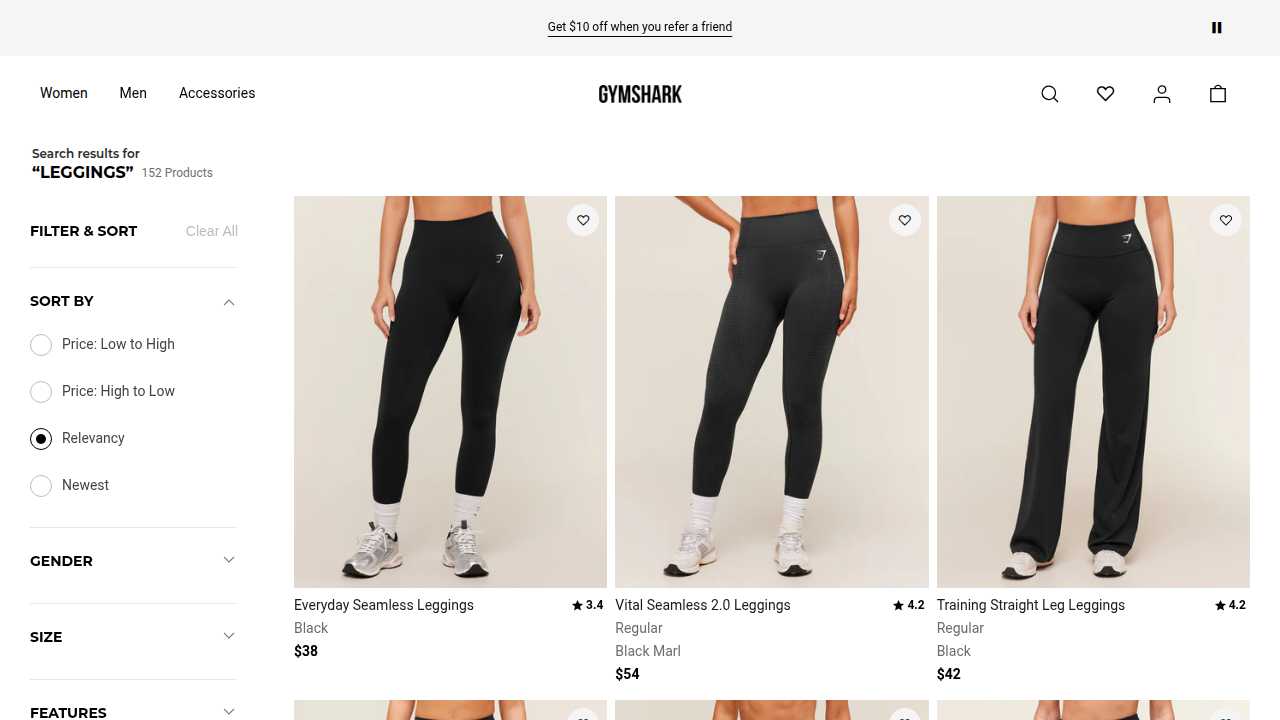
- Partial Search page is accessible but returns a generic title ("Search | Gymshark") with no visible product count or filter state in the H1
Stage 2
Consideration
78
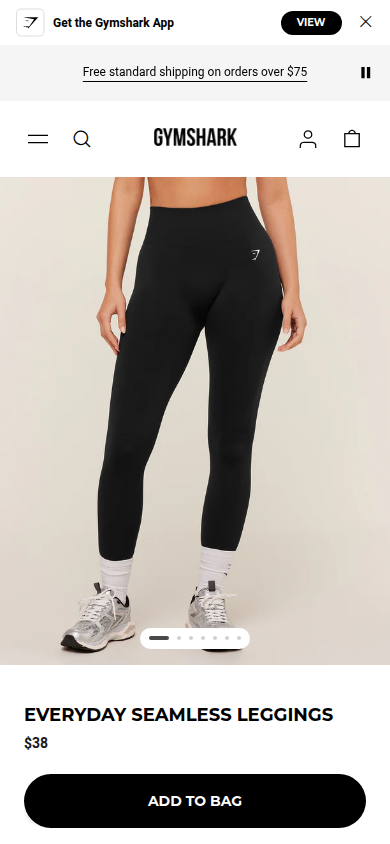
- Pass Product pages show color variant swatches as linked images with descriptive aria labels — good for color browsing
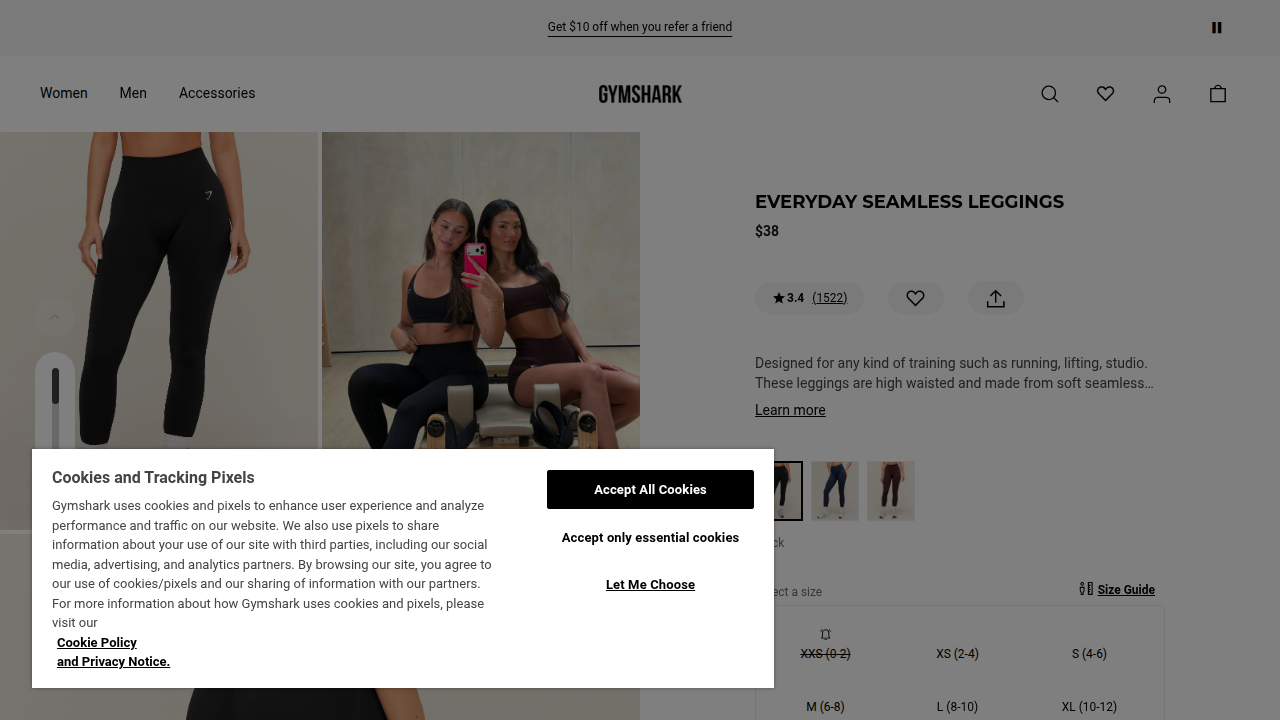
- Pass Aggregate rating (3.4 stars, 1,522 reviews) displayed prominently on PDP with a star button linking to reviews section
- Pass Size guide accessible from the PDP with a dedicated modal — "Customers say it fits true to size" shown inline below size selector
- Pass "Get The Look" cross-sell carousel on the PDP with 2 complementary products — good consideration touchpoint
- Partial Product descriptions are predominantly marketing copy without genuine technical depth — "soft, lightweight, stretchy" describes every legging on the market
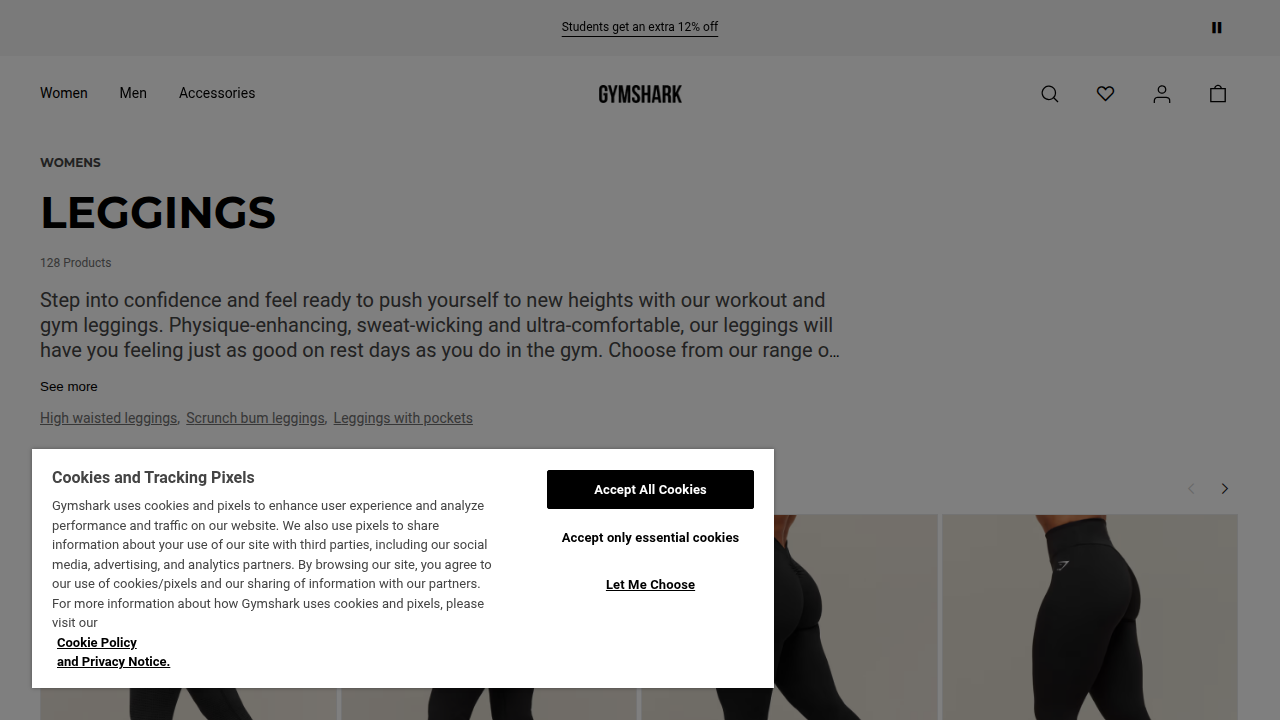
- Partial Collection pages lack editorial context — no descriptive copy above the product grid explaining the collection's purpose or who it's for
Stage 3
Purchase
67
- Pass BNPL options prominently shown on PDP: PayPal Pay in 4 ($9.50/payment), Klarna, and Afterpay — strong payment flexibility
- Pass Payment methods in footer: Visa, Mastercard, PayPal, Apple Pay, Klarna, Amex, Afterpay — comprehensive coverage
- Pass Gymshark Loyalty XP displayed on PDP: "Purchasing this product earns 304 XP" — incentivizes purchase completion
- Fail Cart page shows zero upsells or cross-sell recommendations — the entire cart is a wasted revenue surface beyond the primary items
- Fail No free shipping progress bar in the cart — customers are not nudged to add more items to reach the $75 free shipping threshold
- Partial Add to Bag button requires size selection first — fieldset intercepts pointer events in a way that confused automated testing and may confuse some mobile users
Stage 4
Retention
76
- Pass Gymshark Loyalty program with XP system — shown on product pages and linked from footer, adds a retention mechanic to every purchase
- Pass Custom Auth0-based account system at auth.gymshark.com — dedicated auth infrastructure rather than Shopify's default accounts
- Pass Loop Returns integration for self-service returns — frictionless returns experience builds re-purchase confidence
- Pass Intercom chat widget for post-purchase support — customer service accessible without leaving the site
- Partial Email sign-up CTA in footer requires clicking a button to reveal a form — could be a persistent inline form for higher conversion
- Partial Gymshark Training App linked from footer but not surfaced in post-purchase flows or product pages where it would be contextually relevant
| Tool / Service | Purpose | Perf Impact | Est. Cost | Status | Action |
|---|---|---|---|---|---|
| Dynamic Yield | Personalization & A/B testing engine | Medium | Enterprise | JS Error | Fix DY.API init order via GTM |
| mParticle CDP | Customer Data Platform — event routing | Medium | Enterprise | Type Errors | Fix page_category attribute type |
| Reddit Pixel | Reddit Ads conversion tracking | Low | — | 403 Error | Investigate 403 or remove from GTM |
| Algolia | Search & product recommendations | Low | $500+/mo | Keep | — |
| Datadog RUM | Real User Monitoring & error tracking | Low | Enterprise | Keep | — |
| Intercom | Customer support chat widget | Medium | $200+/mo | Keep | — |
| OneTrust / CookieLaw | Cookie consent management | Low | $100+/mo | Keep | — |
| BazaarVoice | Product reviews platform | Low | Enterprise | Keep | — |
| Loop Returns | Self-service returns management | Low | $250+/mo | Keep | — |
| Amazon DSP | Amazon Advertising retargeting pixel | Low | — | Keep | — |
| AWS WAF Challenge | Bot protection / Web Application Firewall | Low | Infra | Keep | — |
| Broken Integrations to Fix | 3 integrations require immediate attention | ||||
Enterprise Stack Assessment
Gymshark runs a sophisticated enterprise marketing stack appropriate for a brand at their scale. None of the tools should be removed — the issue is that at least three are misconfigured and silently failing. The most impactful fix is resolving the Dynamic Yield initialization error, as this directly affects personalization revenue across the entire site. The Reddit pixel 403 is also worth investigating before any future Reddit campaign spend.
Technical Debt
- Blocking Dynamic Yield initialization race condition: DY.API is called before the SDK initializes. The script loads asynchronously via CDN (cdn.dynamicyield.com) but GTM fires DY.API calls before the SDK's onready callback. This causes personalization, recommendations, and A/B test assignment to fail silently on every page load. Fix: ensure DY calls are wrapped in a DY.onReady callback or move the DY script to load synchronously in the <head>.
- Notable Next.js runtime config deprecation: The codebase uses next/config (getConfig()) which is deprecated and will be removed in Next.js 16. Any major Next.js version upgrade will break this. Migrate to environment variables (process.env.NEXT_PUBLIC_*) and Next.js's built-in config patterns. This should be addressed in the next major dependency maintenance cycle.
- Notable mParticle event schema mismatch: page_category and filters attributes in product view events are passing non-primitive values (likely arrays or nested objects) instead of strings. This corrupts audience segment data in the CDP. The fix is to serialize these values at the GTM data layer push level, before the mParticle SDK receives them.
- Notable Fieldset pointer-event interception on size selector: The size selection fieldset intercepts pointer events in a way that prevented automated add-to-cart testing. While this may be intentional for scroll behavior, it could create friction for users on certain touch devices. Test the size selection flow thoroughly on Android and iOS Safari.
- Minor Redundant Google Ads conversion tags: Three separate Google Ads account IDs fire on product pages (AW-933026149, AW-823557903, AW-11110630210). While this may reflect different market campaigns, each fires a separate network request. Review whether all three are actively needed or if any can be consolidated under a single account to reduce page weight.
- Minor Multiple Datadog RUM requests per page load: The Datadog RUM SDK is sending 8–10 separate batch API calls per page load (observed via network log). Ensure the SDK's batch configuration is optimized to minimize network overhead. Datadog's default batch behavior should handle this, but high request counts suggest the SDK may be configured to flush more aggressively than needed.
Logo

Brand Palette
#000000
Primary / CTAs
#FFFFFF
Background
#1A1A1A
Body Text
#F5F5F5
Backgrounds / Cards
Brand Consistency
Fix & Ship Fast
- Fix Dynamic Yield initialization order in GTM — wrap DY.API calls in DY.onReady callback to stop the silent personalization failure that's affecting every page view
- Remove or fix the Reddit Pixel in GTM — the 403 error fires on every page load and contributes to wasted network requests and analytics noise
- Add Organization JSON-LD to the About Us page with foundingDate, founders (Ben Francis), and numberOfEmployees — a 10-minute code change with direct GEO impact
- Add publisher name and logo to Article schema on all blog posts — fixes incomplete structured data that prevents full Google rich results eligibility
- Fix mParticle event attribute type errors by serializing page_category and filters as strings in the GTM data layer push
Revenue Improvements
- Implement cart upsells and cross-sell recommendations — surface "Complete the Look" or "Customers Also Bought" within the cart, targeting the $75 free shipping threshold
- Add a free shipping progress bar to the cart page showing exactly how much more needs to be added to qualify — a proven high-ROI cart optimization
- Rewrite product meta descriptions using a richer template by collection — each collection should have a distinct description formula that highlights the key differentiator
- Add BreadcrumbList schema to all product and collection pages — straightforward structured data that's currently missing despite clear site hierarchy
- Replace all-caps navigation image alt text ("NEW IN", "SUMMER STAPLES") with descriptive alternatives explaining what each image depicts
- Add inline email capture to the footer (expanded form visible by default) rather than the current two-click flow
Long-Term Growth
- Elevate product storytelling across top-selling SKUs — commission original content from athletes and designers explaining WHY each material was chosen, HOW it performs in real training scenarios, and WHAT distinguishes it from alternatives at the same price point
- Add editorial content sections to key collection pages (Women's Leggings, Men's Shorts, Sports Bras) — even 150 words of authentic copy improves both GEO fan-out coverage and on-page dwell time
- Surface the Gymshark Training App within the post-purchase journey and on training-specific product pages — contextual app promotion drives the cross-product ecosystem engagement that builds lifetime value
- Investigate Merchant Center feed health and confirm GTIN coverage across all active SKUs — the product schema already includes GTINs, making feed enrichment straightforward
- Build an entity disambiguation page for the brand (or expand the About page) to explicitly cover press mentions, awards, certifications, and the brand's founding story in a structured, citable format